Rome, Italy · A field report

Rome looks Christian.
Look closer.

Rome is filled with Roman Catholic churches, shrines, institutions, and Christian art. But Catholic identity, participation in religious services, and life in an evangelical Protestant church are different realities. Rome sits where that inherited Catholic culture, rapid religious change, a small evangelical presence, and global migration meet.

18%attended any place of worship weekly in 2023—an all-religions measureIstat
<10%of people ages 18–34 attended any place of worship weekly in 2023Istat
14.2%of Rome’s registered residents were foreign citizens at the end of 2025Roma Capitale

The question beneath the monuments

Catholic heritage, religious practice, and evangelical church life are different questions.

Italy already has long-established Catholic, Orthodox, Protestant, and evangelical communities. Naming them accurately is part of respecting the people who live here.

We serve as evangelical Protestants. Our purpose is not to erase Italy’s Catholic history or imply that no sincere believers exist outside our tradition. It is to proclaim our convictions plainly: Scripture opened, Christ clearly proclaimed, believers formed in community, and healthy gospel-centered churches strengthened.

That distinction also clarifies our posture. We come to learn from Italian believers, serve Baptist and like-minded evangelical churches, and invest in work that belongs to the church here—not to build a foreign platform around ourselves.

Read the fuller story of Catholic Italy and its evangelical minority

Why Rome

Four realities converge in one city.

No single statistic makes Rome strategic. The case appears where history, secularization, migration, and the life of the Italian church meet.

01

A Catholic inheritance

Rome’s public religious landscape is shaped especially by Roman Catholic churches, institutions, feasts, and language. Visible Catholic heritage does not tell us how many people practice, believe, read Scripture, or belong to an evangelical church.

02

A changing Italy

Istat’s all-religions measure found that fewer than one in five people attended any place of worship weekly in 2023, while nearly one in three never attended.

03

A small evangelical presence

Joshua Project’s broad mission-research category places evangelicals at about 1.5 percent of Italy. That umbrella is wider than the Baptist and like-minded churches we hope to serve.

04

A city of the nations

Rome’s registry counted 399,452 foreign citizens at the end of 2025—about one in seven registered residents—including substantial communities from revised 10/40 countries.

Follow the complete argument

The map of mission is changing

The mission field has moved—without making the old map irrelevant.

Migration has placed people from many nations in the same Roman neighborhoods. Some come from places where open Christian witness is limited. Nationality cannot tell us what a person believes, but it does show that peoples once perceived only as distant are now nearby.

The missionary task is connected: engage Italians with the gospel; encourage and equip Baptist and like-minded evangelical churches; and help those churches reach unreached peoples now living in Italy.

Explore Rome & Migration
Rome registry · 2025Registered residents
Bangladesh38,225
Egypt12,185
Morocco5,039
Pakistan3,469
Tunisia3,249

These are citizenship counts, not religious or people-group labels and not evidence that an individual followed a particular migration route.

Small does not mean absent

Italy already has Baptist and evangelical churches.

Broad statistics often combine Baptists, Brethren, Pentecostals, charismatic groups, historical Protestants, and independent churches. Those categories describe a religious landscape; they do not define our ministry constituency.

We hope to serve Baptist and like-minded evangelical churches: listening before speaking, working under local accountability, and helping strengthen what can endure locally. One established Baptist union, UCEBI, reports 117 churches and about 5,000 members, but no source provides a complete national count of all churches aligned with our convictions.

Meet the Italian evangelical story
1848

Waldensians received civil and political rights after centuries of restriction.

1935–55

Pentecostal worship was prohibited under a Fascist-era circular that survived a decade beyond the regime.

Today

Baptist and like-minded evangelical churches serve faithfully within a small and fragmented landscape.

What we are doing

Long-term work, described honestly.

We distinguish current commitments from developing ministry and future hopes. Ordinary life is not a delay before ministry; it is the infrastructure that makes faithful ministry possible.

Now

Language, listening, and local church relationships

We are learning Italian, building ordinary neighborhood friendships, and serving under the care of established churches and ministry partners.

Taking shape

Hospitality, Bible conversation, and careful storytelling

We want our home, tables, conversations, and media work to create room for clear Christian witness and a more informed church.

Long horizon

Disciples, leaders, and healthy local churches

Our hope is to strengthen work that can be increasingly Italian-led, church-rooted, and durable across generations.

See our approach and accountability

From Rome · September 2026

Learning the slow work of staying.

Our daily notes keep returning to the same lesson: language, school mornings, neighborhood errands, prayer, and patient friendship are becoming the structure of a life here.

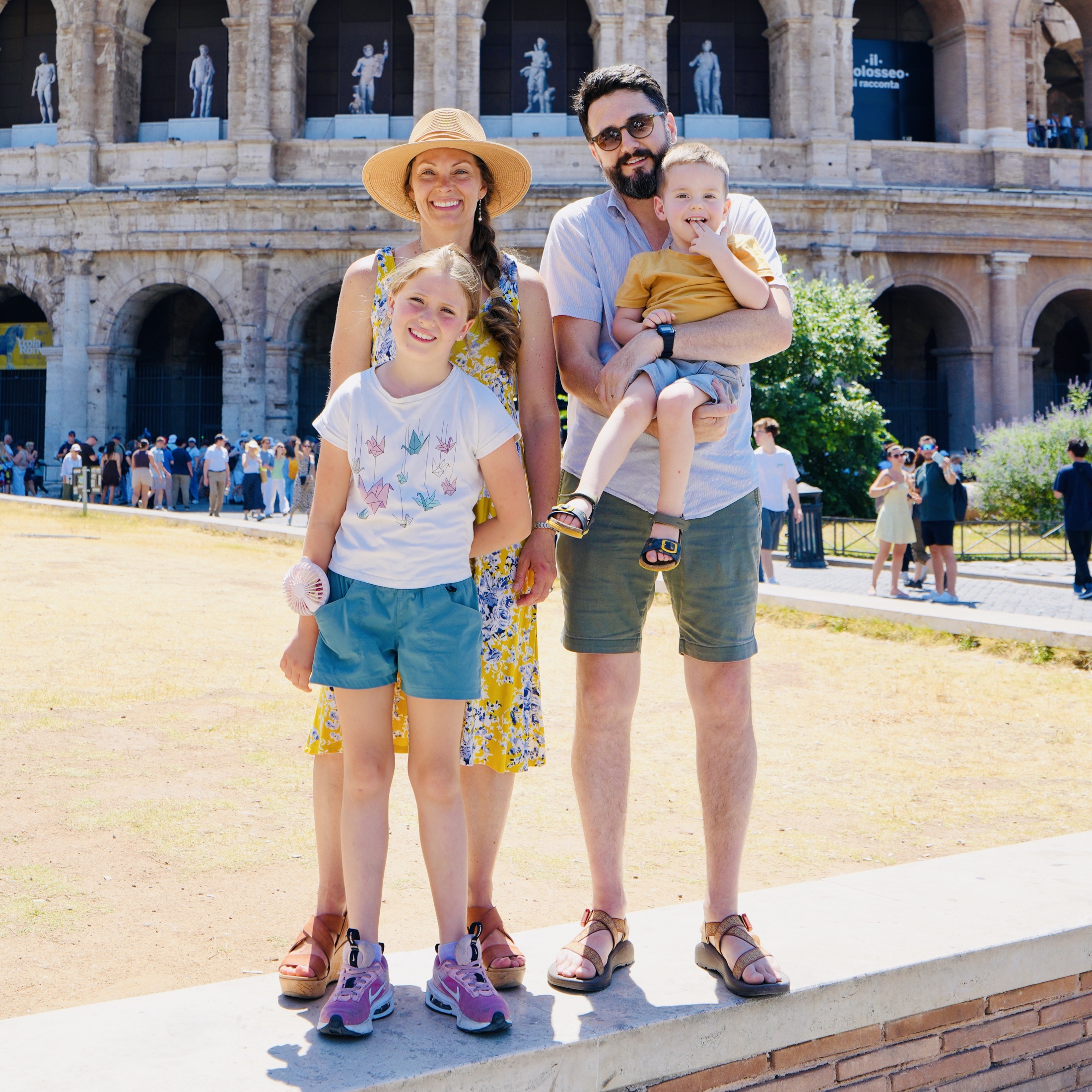
Meet the Wright family
01

Language and belonging

Structured Italian study and small daily conversations are slowly turning a foreign place into home.

02

Church and friendship

We are listening to Italian pastors and believers, sharing life with neighbors, and allowing trust to grow without hurry.

03

A sustainable household

Family rhythms, healthy limits, hospitality, and spiritual formation matter if we intend to remain for years.

A weekly field note

What is changing in Europe—and why it matters in Rome.

The Europe & Italy Religion Brief follows demographic change, migration, evangelical life, and church-strengthening with direct links to the underlying evidence.

It is where our research stays current, where encouraging developments sit beside difficult ones, and where continental trends are brought down to street level.

Read This Week’s Brief

Evidence with limits

Every number has a definition.

Italy does not collect a national religion census. “Christian,” “Catholic,” “Protestant,” “evangelical,” “member,” and “attender” are not interchangeable. Our research page explains what each source measures, where estimates disagree, and why we use cautious language.

Read our methodology and sources

Walk with us

Participate in a long work.

Partnership helps a family remain, learn the language, serve under local leadership, practice hospitality, and invest in ministry that grows at the speed of trust.